When I arrived in Făgăraș in the centre of Romania, I still felt tired from my previous night in Cluj. I had a great Workaway encounter there, Alexandra, and we ended up at an open-air event, where we watched the band Marquis Noir play. What a great concert! Afterwards we had a few drinks and Alexandra introduced me to her city with an inspiringly open, loving and lively manner.
After that, my first Workaway adventure of this trip began. Workaway is a platform where hosts can offer work for all kinds of projects. Travelers can then search for work anywhere in the world, usually in exchange for food, accomodation and cultural exchange. Additionally, the network can be used to get to know fellow travelers.
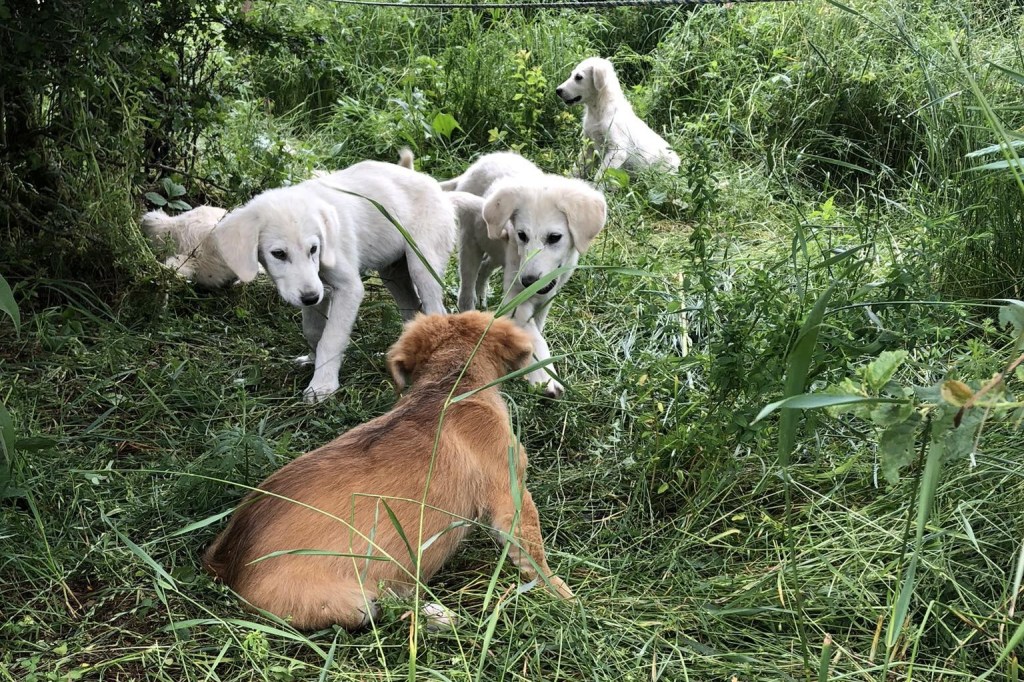
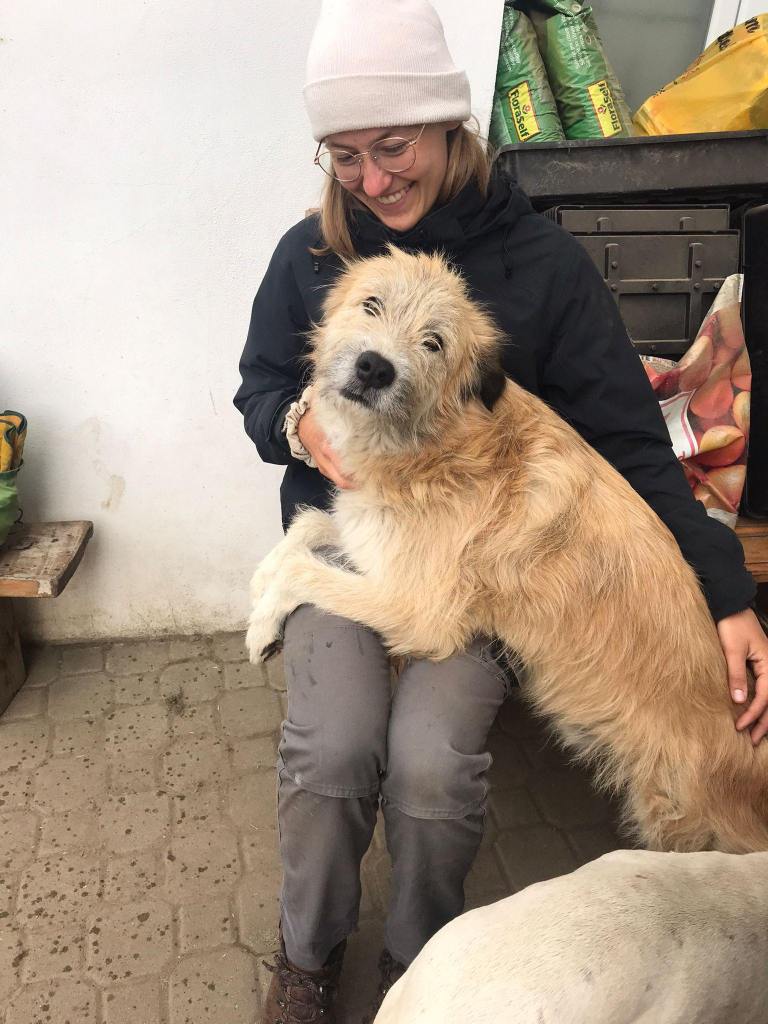
My hosts for the time were Heiko and Katja, who had moved from Germany to Romania a few years ago with their two sons and numerous animals. Over 100 dogs, more than 50 horses, some cats, cows and water buffaloes as well as goats and chicken belong to their farm now. In addition, two more temporary Workawayers belonged to the team: Kamila from the Czech Republic and Marko from Germany.
Daily routines and Rest
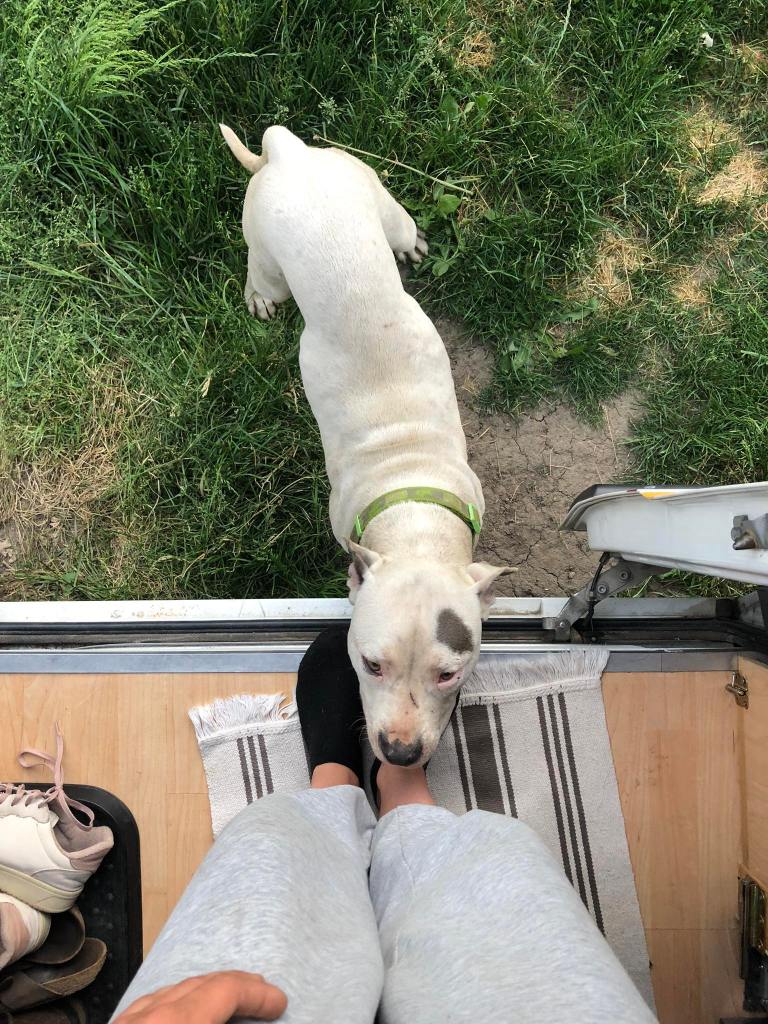
After I had found a good parking spot for Fred on their garden property, I let the car’s engine be for two weeks. I arrived and a new daily routine began. First I got to know all the dogs in the house: Pablo, Toffee, Balin, Teddy, Grace, Prinzessin and so on. „You’ll never walk alone,“ Katja said, and she’s right. Whenever I opened the car door, at least eight paws were standing in front of the door and slowly tried to make their way into the van. With my cleaning mania, however, this remained a red zone for two weeks, I would’ve gone insane with the dog hair in bed.
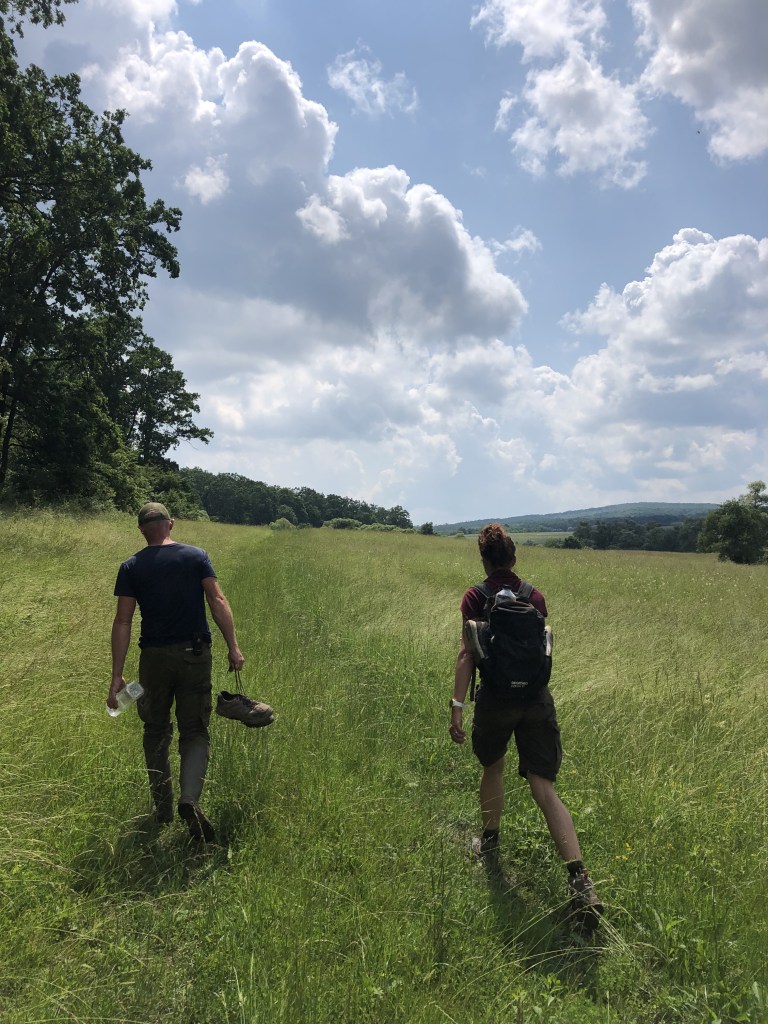
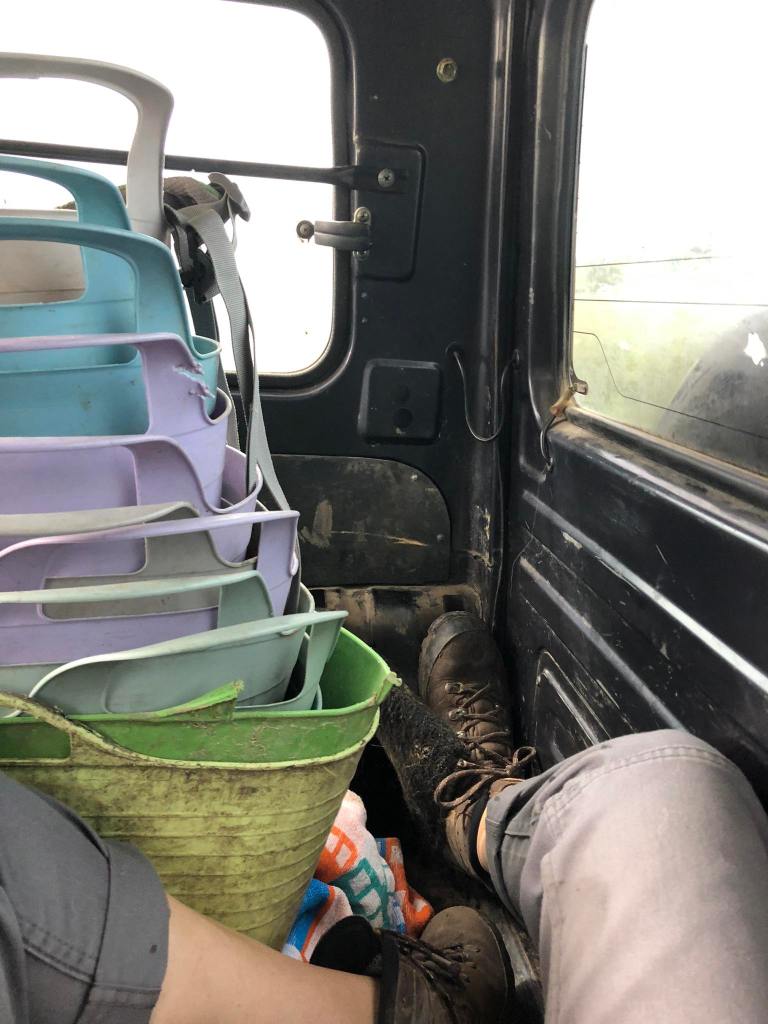
At 8 o’clock in the morning, we had breakfast and then headed „out“. That means: 20 minutes of dirt-track-rodeo with no more than 10 mph to the 70 hectare property in the Romanian nowhere. There’s even a car for this, with the sole purpose of driving back and forth on that path: a completely stripped-down Suzuki with four-wheel drive. How much fun I had driving this car over the muddy tracks (or being shaken as a passenger in the trunk).
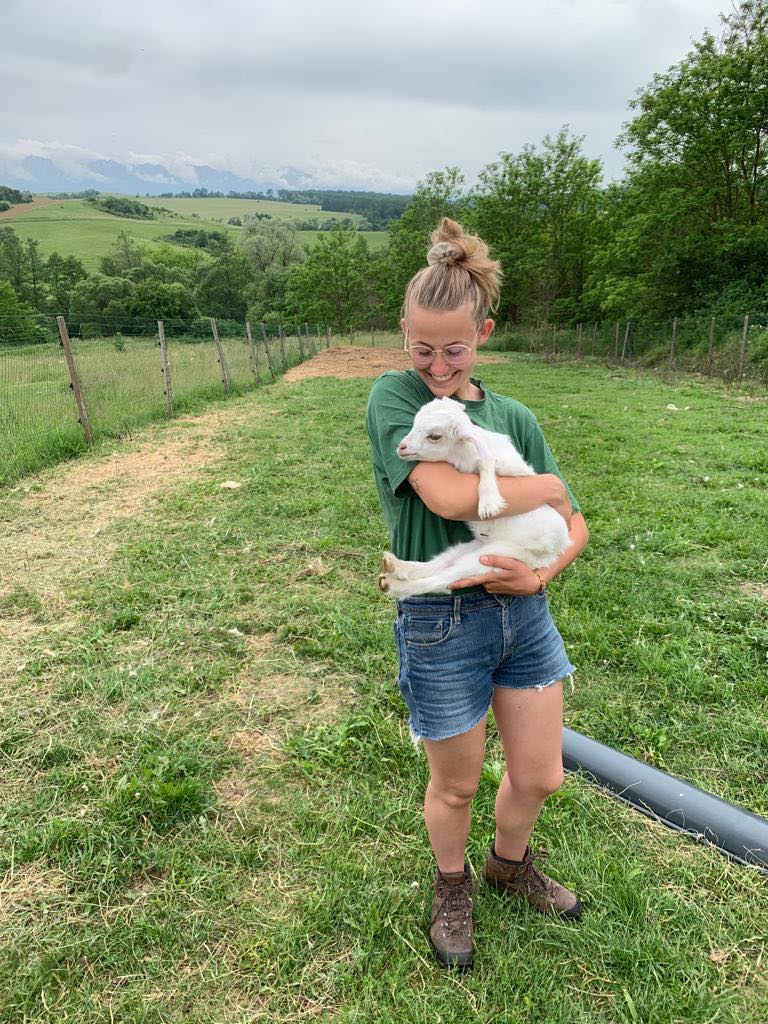
Afterwards, the usual tasks had to be done: Horses, dogs and goats were fed as well as cleaned and almost daily, fences had to be built, checked or repaired. We then took our lunch break somewhere sheltered from the sun or rain, because during my two-week-stay in June it rained for a whole week straight.
Depending on the weather and the work situation, we eventually came back every day in the afternoon, sometimes even in the evening, and ate together. After that, my own work began and I wrote some articles, sometimes until late night, to finance my travels.
„The stallions are gone!“
„Life happens when you’re making plans,“ this sentence became a running gag in Făgăraș, where things didn’t always go to plan. So when we heard the call „The stallions are gone!“, the task for the day became clear and delayed or erased any other plan. For about five hours, we were trying to catch the stallions, who only had the mares on their minds. It’s been a long time since I’ve thought so much about masculinity and this sight raised some questions in my mind. The stallions were biting each other until they bled, they were completely irrational and thus quite dangerous, both to each other and to us. It didn’t help much that the meadows had turned into mudpits after heavy rainfalls. Finally, we got the stallions away from the mares and back to their paddocks.

Grass doesn’t grow faster when you pull it
Romania has a poor supply system in regard to horse keeping, i.e. hardly any farriers, stores or vets. Those involved in this project in Făgăraș were therefore forced to do a lot by themselves. Of course, this is often time-consuming and exhausting, but at the same time, this hands-on mentality impressed me very much. I really learned a lot, for example how to cut hooves.
In Făgăraș I was lucky to work with the horse trainer Silke Frisch-Branderup. While watching her, I got the feeling that she looks straight into the horses‘ heads. I’ve never believed in „horse whispering“ but while watching Silke, I at least reconsidered it.
So far, I have had many years of horse riding lessons in my life, mostly dressage, a little western as well as show jumping. Anyone who has spent some time around the German equestrian scene may know roughly how I was conditioned there. The bottom line is that horses, especially school horses, get little space in it. Simply put, horses have to function and obey, they are treated with a similar competitive mindset as the rest of us. Prettier, higher, faster. There is a certain idea of what horses should look like and how they should move, especially in the respective riding disciplines.
I think I’ve always had the feeling that no one’s really happy with this system, not even the students, who then have to deal with the animal’s frustration and their overload or boredom.
Coming to Făgăraș, I finally found an alternative to mainstream horse keeping and above all, I found an approach based on respect. Step by step, Silke began to work with the animals so that one day they can be ridden. What impressed me most was the complete right to exist, that Silke gives to each and every horse. There are good days, but most of all there can be bad days too and that is completely okay. Any progress, no matter how small, is progress and it is not relativized, but accepted. „We all want to develop and it’s the same with the horses,“ says Silke.
I got the impression that she worked with the animals: together. The horses seemed to cooperate with her above average, as if they wouldn’t want to disappoint her. That I understand pretty well, by the way. I, too, felt an above-average interest to not behave unnecessarily stupid in her presence.
I also learned a lot these days, which complemented my meditation practice, because horses reflect our energy, as Silke summed it up well in a German interview with Pferdekult:
„Horses can be wise teachers for us on our path to ourselves. Horses love authentic energy and always respond directly and unvarnished to our charisma and energy. We can deduce from their behavior and reactions what is really going on with us right now. That is often something completely different than the image we have of ourselves. In this way, horses help us to recognize ourselves.“
As I’m in Romania thinking about all this, I’m noticing quite a lot within myself. A while ago, I had already realized how deeply I previously internalized meritocratic thinking and how ungracious I inwardly often was with other people. Now I realized above all how little acceptance I often give to myself. But I also realized how good it felt to actively reflect on this, because I can finally work on it now.
In the future, I’d like to be able to open up more and be myself without having to adapt to certain images. I have spent many years fulfilling roles. Now it is time to discover what is important for me. I want to become confident and aware of myself, give myself and everyone else more space for development and growth. I prefer cooperation to competition, I’d like to be able to love without bias, without restrictions, I’d like to elevate honesty and loyalty to my core values. Why was I always so afraid of this? I am truly grateful to be able to take the time for this learning process now. Grass doesn’t grow faster when you pull it.
 das leben geht vor